The first planet found with the aid of a telescope, Uranus was discovered in 1781 by astronomer William Herschel, although he originally thought it was either a comet or a star.
It was two years later that the object was universally accepted as a new planet, in part because of observations by astronomer Johann Elert Bode.
Herschel tried unsuccessfully to name his discovery Georgium Sidus after King George III.
Instead the planet was named for Uranus, the Greek god of the sky, as suggested by Johann Bode.
Five Things to Know About Uranus:
- HUGE: Uranus is about four times wider than Earth. If Earth were a large apple, Uranus would be the size of a basketball.
- SEVENTH WANDERER: Uranus orbits our Sun, a star, and is the seventh planet from the Sun at a distance of about 1.8 billion miles (2.9 billion kilometers).
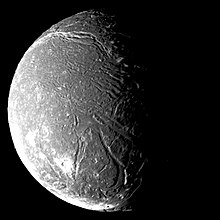
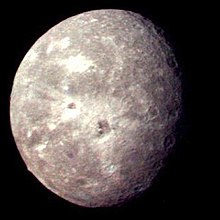
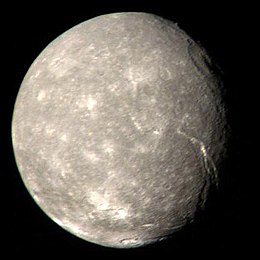
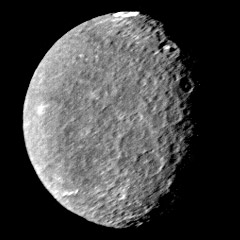
- MANY MOONS: Uranus has 27 known moons, and they are named after characters from the works of William Shakespeare and Alexander Pope.
- Ariel
- Oberon
- Titania
- Umbriel
- GASSY: Uranus has an atmosphere made mostly of molecular hydrogen and atomic helium, with a small amount of methane.
- ICE GIANT: Uranus is an ice giant. Most of its mass is a hot, dense fluid of "icy" materials – water, methane and ammonia – above a small rocky core.